Data scientist training demands a rare mix of logic, curiosity, and persistence. It’s not just another short-term skill upgrade; it’s a structured transformation that blends technical fluency with analytical judgment. You’ll juggle programming languages, statistical models, machine learning systems, and real-world business problems all at once. The intensity can surprise even experienced professionals. Yet for those who stay the course, the payoff is great: career security, higher earning potential, and the satisfaction of solving real problems with data. This article breaks down what makes the process challenging, how to overcome obstacles, and how to turn rigorous data scientist training into a high-value career advantage in Canada.
Key Takeaways
- Data scientist training involves mastering both technical and business-oriented thinking through structured, hands-on learning.
- Staying motivated requires the right mix of mentorship, projects, and community support that keeps your progress consistent.
- Completing this training opens access to one of the fastest-growing and best-paid career paths in Canada.
The Role of Practical Projects and Real-World Experience in Mastering Data Science
Data science isn’t mastered in theory; it’s proven in practice. Real-world projects give you the context to apply what you learn, testing your ability to clean data, build models, and interpret results that matter to businesses. A textbook might teach you how a regression algorithm works, yet only a live project teaches you how to choose the right one when deadlines are tight and data is imperfect.
This is where structured programs excel. Top data scientist training courses in Toronto combine instruction with case studies drawn from healthcare, finance, and marketing. Students don’t just analyze hypothetical data; they work with complex, messy datasets similar to those used in professional environments. Each assignment builds the ability to move from raw numbers to insights that drive real decisions.
These projects also teach collaboration. You’ll learn to communicate findings with non-technical stakeholders, adjust to changing requirements, and defend your conclusions with confidence. This balance of technical precision and communication skill prepares you to operate as a true professional in Canada’s evolving data economy.

Apply Your Skills to Real Data Projects
Join a program that connects theory with real-world problem-solving. Build your confidence through practical case studies guided by experienced mentors.
Explore Python for Data AnalyticsSupporting Resources and Strategies to Stay Motivated Through Training
Learning data science takes consistency. The workload can be intense, particularly when juggling projects, coding exercises, and theory. Many learners lose momentum without a structured plan, yet the right resources and mindset can make progress sustainable. Two core pillars matter most, strategy and support.
Here’s how to stay engaged during your data scientist training:
- Mentorship and Peer Support: Surround yourself with experienced instructors and peers who challenge your thinking. A strong network helps you stay accountable and offers clarity when concepts feel complex.
- Short Learning Sprints: Break larger topics into daily goals. Small, frequent wins build momentum and confidence over time.
- Practical Projects: Balance reading with doing. Each real-world task reinforces theory and prevents burnout.
- Time Management Systems: Use digital tools like Trello or ClickUp to track milestones. Visual progress charts help you see improvement in real time.
- Career Vision: Keep a clear picture of where you’re heading, data analyst, machine learning engineer, or AI consultant. Having purpose makes persistence easier.
Many professionals also combine Python for Data Analytics with courses in Machine Learning and Big Data Analytics to create a structured roadmap from learning to employment. Building your learning ecosystem makes every week of study more productive.
Career Pathways After Completing Data Scientist Training in Canada
Completing data scientist training can reshape your career trajectory entirely. The demand for professionals who can analyze, interpret, and act on data continues to surge across Canadian industries. A report from Glassdoor lists data science as one of the top jobs for growth and salary potential. Employers seek individuals who combine technical knowledge with analytical storytelling, the ability to make data speak to strategy.
Graduates of specialized programs can explore diverse roles across both public and private sectors. Below are some examples of high-impact career paths:
- Data Analyst: Focus on collecting, cleaning, and interpreting datasets to assist managers in business decision-making.
- Machine Learning Engineer: Design algorithms that allow systems to learn patterns automatically, used in finance, retail, and healthcare analytics.
- Business Intelligence Specialist: Create dashboards and reporting systems that visualize performance metrics for strategic planning.
- Data Engineer: Manage data pipelines and infrastructure that keep analytics systems running smoothly.
- AI Research Associate: Support innovation teams in building models for predictive analytics and automation.
With structured training from a recognized institution, you position yourself for meaningful roles that go far beyond entry-level analytics. The combination of technical and strategic expertise makes you a valuable contributor to any data-driven organization in Canada.
Common Challenges Faced During Data Scientist Training in Toronto
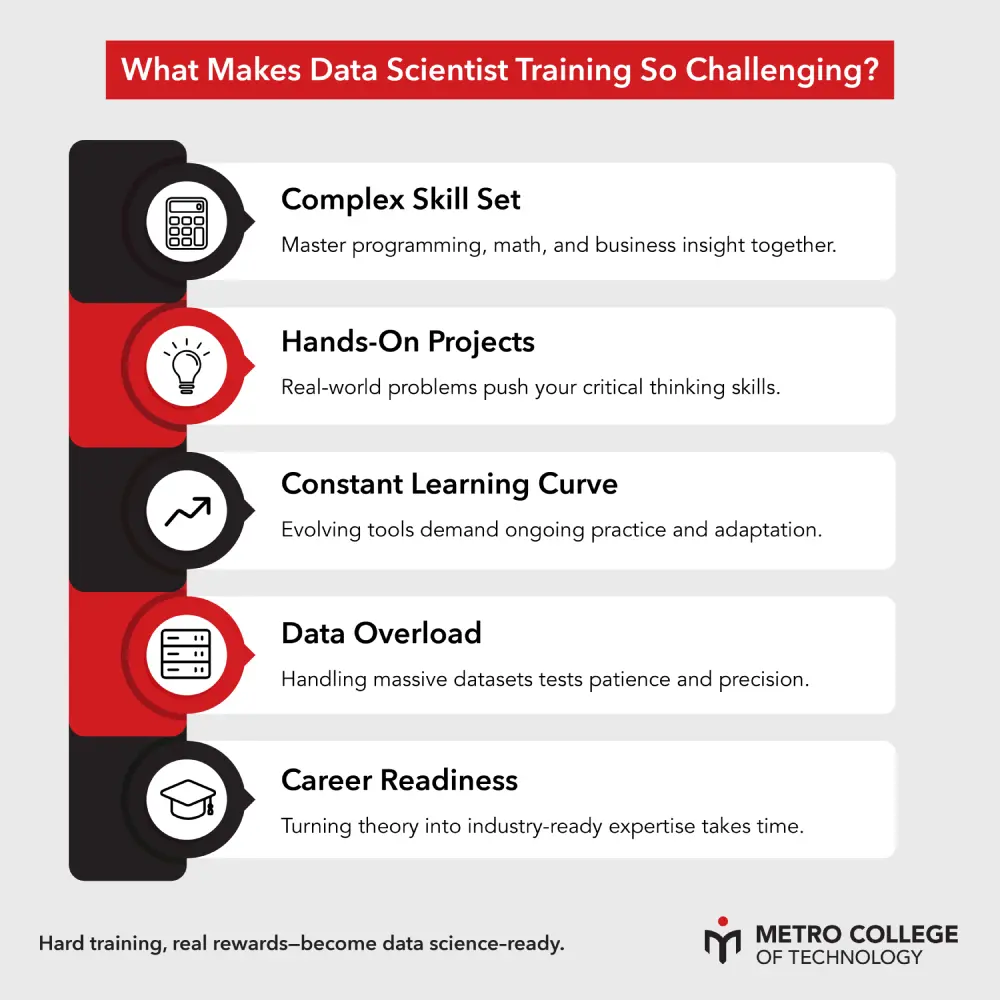
The path to mastering data science is rewarding yet demanding. The Metro College of Technology infographic illustrates the five most common challenges students face during training. Each represents a growth opportunity that tests discipline and adaptability.
Here’s what makes data scientist training challenging:
- Complex Skill Set: You’re required to master programming, mathematics, and business logic together, a demanding trio that tests mental agility.
- Hands-On Projects: Real-world data problems require critical thinking under pressure. Each project strengthens problem-solving but requires time and precision.
- Constant Learning Curve: Technology evolves quickly, demanding continuous adaptation to new tools and techniques.
- Data Overload: Managing massive datasets challenges focus and computational efficiency. Accuracy becomes non-negotiable.
- Career Readiness: Translating theory into practical skill takes repetition, mentoring, and patience.
Each of these challenges contributes to long-term resilience. Facing them with guided instruction and consistent practice prepares you for the unpredictable realities of working in data science fields.
Essential Skills and Knowledge Required for Data Science Success
To stand out in today’s analytics job market, you need more than basic coding knowledge. Employers look for a balanced mix of technical expertise, analytical thinking, and communication skills. Data scientist training develops these traits methodically, transforming you into a professional who can turn raw data into business intelligence.
Core competencies every aspiring data scientist should develop include:
- Python Programming: The foundation of modern analytics. Learn Python to handle automation, statistics, and visualization through libraries such as Pandas and Matplotlib.
- Statistical Analysis: Understand probability, regression, and hypothesis testing to interpret data patterns accurately.
- Machine Learning Algorithms: Study supervised and unsupervised models that predict outcomes or cluster information automatically.
- SQL and Database Management: Organize and query datasets efficiently to ensure fast, reliable analysis.
- Data Visualization: Present findings using Tableau and Matplotlib for decision-ready reports.
- Soft Skills and Storytelling: Translate complex results into actionable recommendations that non-technical audiences can understand.
Each of these abilities adds to your market value. Combining Python for Data Analytics, SQL Programming, and SAS Training helps you create a complete toolkit recognized by employers worldwide.
FAQ
What qualifications do I need before starting data scientist training?
A background in math, statistics, or computer science helps, yet it’s not mandatory. Many successful learners come from business or economics. What matters most is curiosity, logical thinking, and dedication to consistent learning.
How long does it take to complete a data scientist training program in Toronto?
Most structured diploma programs last between six months and one year, depending on your learning pace. Full-time learners progress faster, while part-time students balance training with work commitments through modular schedules.
Can I find a data science job after completing a single course?
Yes, entry-level positions such as data analyst or reporting specialist often accept candidates with focused training. Continuing with specialized courses in machine learning and data visualization increases employability and pay scale significantly.
Enrolling in Data Scientist Training Programs or Courses Can Help Build Up Your Career
Data scientist training challenges you intellectually while equipping you with practical tools to stand out in today’s analytics-driven market. The balance of technical mastery and strategic insight makes the effort worthwhile. Completing a structured data scientist training program through Metro College of Technology transforms your skill set into measurable career momentum.
As businesses across Toronto and Canada race to adopt automation and AI, professionals with verified analytical ability hold the advantage. Training is rigorous, yet the reward, job security, high demand, and the ability to shape data-driven decisions, far outweighs the challenge. Begin your learning path today, and turn ambition into expertise that defines your future success.

Advance Toward a Career in Data Science
Learn the technologies, analytics tools, and business applications that power Canada’s top data careers. Gain recognized credentials that employers trust.
Explore Machine Learning & Big Data Training