Cloud computing mistakes can drain company budgets faster than any hardware expense. Many organizations rush to migrate systems without careful planning, misjudge their software fit, underestimate training needs, or skip proper testing. These errors can lead to outages, inefficiencies, and inflated costs that hurt productivity and reputation. This article examines the most costly missteps in cloud adoption, why they occur, and how professionals trained in modern IT strategies can prevent them.
Key Takeaways:
- Even minor cloud computing mistakes can trigger significant operational and financial losses.
- Proper leadership, training, and testing reduce risks in large-scale cloud migrations.
- Understanding change management principles prepares you to manage successful digital transformations.
What is Cloud Computing and How Are They Related?
Cloud computing refers to the delivery of computing services, servers, storage, databases, networking, and software over the internet. Instead of owning physical infrastructure, businesses rent access from cloud providers like AWS, Microsoft Azure, or Google Cloud. This model offers scalability and flexibility, allowing organizations to expand capacity instantly while paying only for what they use.
The concept connects closely to cost management and digital transformation. When companies migrate to the cloud, they aim to improve efficiency and reduce IT overhead. Yet without proper governance, these migrations introduce complex billing structures and hidden technical dependencies that can quickly increase expenses.
Cloud computing also intersects with cybersecurity, data analytics, and software engineering. Each area relies on the cloud’s distributed nature for collaboration and performance. Students studying these subjects must grasp not just the benefits, but the risks of poorly managed migrations, vendor choices, and architectural decisions.
5 Expensive Cloud Computing Mistakes
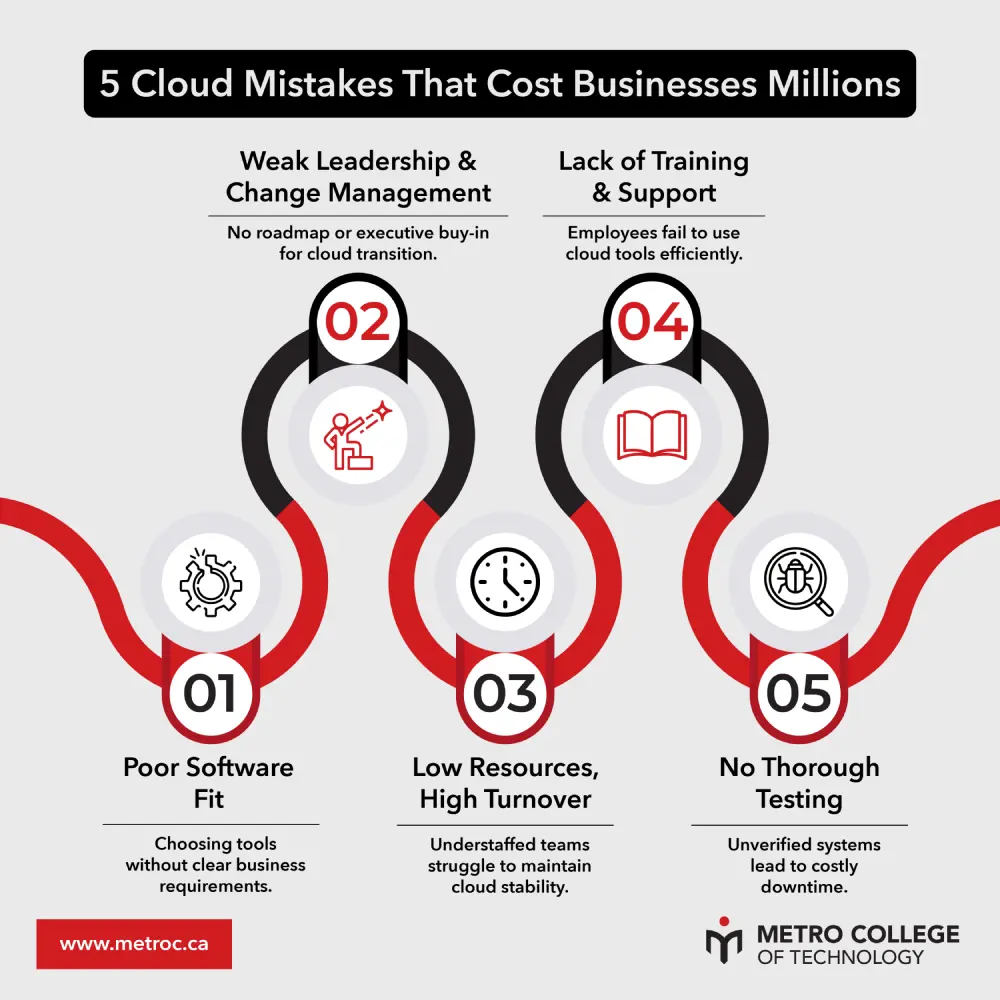
The most costly cloud computing mistakes share a common theme: weak planning. Organizations often underestimate the need for leadership, training, testing, and the right skill sets. Below are five common pitfalls that lead to wasted budgets, failed deployments, and stalled innovation.
1. Poor Software Fit and Inaccurate Requirements
Selecting the wrong software can derail an entire cloud project. When a system’s capabilities don’t align with organizational needs, costs rise through customization and reconfiguration. Students entering the IT field must learn to conduct accurate requirement analyses, identifying both business goals and technical specifications, before implementation begins. Clear documentation, user feedback, and early stakeholder input prevent mismatched solutions that become financial burdens.
2. Lack of Leadership and Change Management
Cloud transitions require clear direction from leadership. Without it, teams operate in isolation, unsure of new processes or accountability. A structured change management plan guides communication, resource allocation, and timelines. Successful leaders communicate purpose, set measurable goals, and maintain team morale throughout the transition. Future IT professionals should understand that technology alone never drives change; people do.
3. Insufficient Resources and High Team Turnover
Moving to the cloud demands expertise, consistent staffing, and realistic budgets. Many organizations fail when they underestimate the manpower required to manage configurations, integrations, and security controls. High employee turnover compounds the issue, disrupting continuity and knowledge transfer. Building resilient teams and cross-training staff reduces these risks and sustains project momentum.
4. Inadequate Training and User Support
A sophisticated cloud platform means little if employees cannot use it effectively. Insufficient training leads to mistakes in data handling, weak security practices, and poor user adoption. Continuous training programs, user guides, and help desks keep teams confident and productive. Cloud certifications and short courses, like those offered at Metro College, prepare future professionals to deliver structured user support at scale.
5. Lack of Thorough Testing
Testing validates the reliability and performance of every cloud environment. Skipping it invites errors, downtime, and security gaps. Companies should test not only technical configurations but also data recovery, system scaling, and failover processes. Rigorous validation ensures that cloud systems perform as promised under real-world conditions. Students learning software testing methodologies gain critical skills to anticipate and eliminate these issues before deployment.
When these mistakes combine, the result is costly downtime and missed opportunities. Organizations that treat cloud adoption as a continuous process, supported by training, leadership, and accountability, see far stronger returns on investment.

Ready to master the skills that help prevent costly cloud computing mistakes?
Learn how Metro College prepares students for careers in cloud administration, IT management, and data security through hands-on projects and industry-aligned training.
Explore Cloud Computing CourseChange Management Strategies to Smooth Cloud Computing Adoption
Adopting the cloud successfully depends as much on human readiness as it does on technology. Effective change management ensures smooth transitions, aligns stakeholders, and builds confidence among users. Leaders and IT professionals must combine communication, structure, and adaptability to sustain success.
Proven strategies include:
- Establish Clear Vision: Define why the migration matters and what success looks like. Everyone involved should understand not only the technical goals but also how the cloud environment will enhance productivity and long-term value.
- Engage Stakeholders Early: Involve department heads, technical staff, and end users from the beginning. Early collaboration creates ownership, helping teams anticipate potential issues before they evolve into costly setbacks.
- Communicate Continuously: Open dialogue prevents misinformation. Regular updates, project newsletters, and feedback sessions keep employees informed and aligned. Consistent communication is the antidote to one of the most common cloud computing mistakes, misaligned expectations.
- Train and Empower Teams: Technical readiness is not enough without confidence. Offer structured workshops, cloud simulation labs, and micro-learning modules. Empowering users builds resilience and reduces dependence on IT support during migration.
- Monitor Progress and Adjust: No change process follows a perfect trajectory. Use dashboards and performance analytics to measure success, track adoption rates, and identify weak points. Adapt strategies as feedback surfaces and celebrate small wins to sustain motivation.
These approaches strengthen organizational agility. By focusing on people as much as technology, leaders reduce friction and ensure that new systems integrate seamlessly into daily operations. For students pursuing IT management and cloud administration, mastering these principles means learning to guide transformation responsibly and prevent the human-driven cloud computing mistakes that cost companies millions.
How to Conduct Effective User Training for Cloud Computing
User training builds the bridge between technology and performance. Even the best infrastructure fails when people lack confidence or understanding. A structured learning plan minimizes operational errors and improves adoption rates.
Effective training methods include:
- Role-Based Training: Tailor learning sessions to specific roles. System administrators require technical detail, while analysts and executives need operational understanding. This prevents one-size-fits-all sessions that waste time and disengage participants.
- Interactive Labs: Create simulated environments where users practice real tasks without consequences. Interactive experiences reinforce retention and reduce anxiety when transitioning to live systems.
- On-Demand Learning Modules: Provide flexible access to learning resources through cloud platforms. Employees can revisit tutorials anytime, avoiding one of the most overlooked cloud computing mistakes: failing to reinforce lessons after initial onboarding.
- Mentorship Programs: Pair experienced professionals with new users to encourage peer support and collaborative problem-solving. Mentorship fosters accountability and builds internal expertise over time.
- Continuous Evaluation: Learning effectiveness depends on measurable outcomes. Quizzes, scenario-based exercises, and user feedback surveys help track comprehension and identify where additional support is required.
A well-designed training framework ensures that technology serves people, not the other way around. When users understand how to navigate cloud systems, organizations achieve smoother workflows, fewer support tickets, and higher system ROI. For students preparing for careers in IT, user education represents more than just knowledge transfer; it’s a safeguard against recurring cloud computing mistakes that weaken otherwise strong technical foundations.
Importance of Comprehensive Testing in Cloud Computing Deployments
Testing is the backbone of reliability in any cloud deployment. Before a new environment goes live, engineers must confirm every function, from data storage to security authentication, works as intended. Poor testing introduces vulnerabilities that may remain hidden until a failure occurs.
Comprehensive testing includes performance, integration, and stress testing. Each verifies how systems behave under different loads and how well they communicate with existing infrastructure. Testing tools such as Selenium, JMeter, and AWS Device Farm simulate real conditions, giving teams measurable confidence before launch.
Testing also supports compliance and data protection standards. For example, validating backup processes ensures recovery after outages, and penetration testing guards sensitive information. Students who understand testing frameworks learn how to minimize risks while maximizing reliability in cloud ecosystems.
Risks of Cloud Migration and How to Mitigate Them
Migration introduces multiple risks, data loss, misconfigurations, security breaches, and unplanned downtime. Each risk requires proactive strategies to prevent financial and operational damage.
Common mitigation techniques include:
- Conduct Detailed Assessments: Review existing systems and dependencies before migrating any data.
- Implement Data Backup Plans: Store redundant copies in separate regions to safeguard against loss.
- Adopt Strong Identity Management: Use multifactor authentication and strict access controls.
- Use Phased Migrations: Move data and services gradually to monitor performance at each stage.
- Partner with Certified Vendors: Work only with providers that meet recognized compliance standards like ISO or SOC 2.
A carefully structured approach helps organizations minimize uncertainty and ensure long-term success.
FAQ
Why do organizations continue making the same cloud computing mistakes?
Many companies underestimate the complexity of cloud transitions. They assume cloud providers handle everything automatically, when in fact governance, configuration, and training remain internal responsibilities. Education and proactive management help avoid repeated costly oversights.
How can students prepare for cloud management careers?
Students should study systems analysis, network management, and project leadership. Certifications in platforms like AWS, Azure, and Google Cloud validate their skills and improve employability. Practicing through labs and simulated projects strengthens both technical and soft skills required for real-world success.
What are the signs of a successful cloud deployment?
A successful deployment maintains uptime, meets performance metrics, and stays within budget. Teams communicate effectively, users adopt the system with minimal disruption, and data security remains intact. Long-term monitoring ensures systems continue performing at expected standards.
Selecting the Right Cloud Vendors for Your Business
Choosing the right cloud vendor determines long-term reliability, cost efficiency, and compliance. Evaluate service availability, support quality, and pricing transparency before signing contracts. Look beyond promotional claims to assess the provider’s record in data protection and service recovery.
Future professionals trained in identifying these factors will save organizations from repeating the same costly errors. Every decision, software selection, testing, and migration links back to avoiding preventable cloud computing mistakes that cost millions. As you advance in your studies, remember that strong judgment, continuous learning, and disciplined planning will make you the expert companies rely on for secure and efficient cloud success.

Ready to gain real-world skills in data analytics for manufacturing and quality control?
Metro College’s programs teach you how to use analytical tools, interpret data, and apply insights that improve productivity and product quality across industries.
Explore Machine Learning and Big Data Analytics Course